How to care for and feed a lovebird – expert advice!
When it comes to choosing an intelligent and beautiful bird, the lovebird is a species that will surprise you. These animals always require living in company because loneliness affects them severely. They are so attached to their partner that they are often called inseparable, reason enough to always have two.

In addition to loving life as a couple, this bird needs certain attention to live healthy and without complications. Here we explain How to care for and feed a lovebird with expert advice so that in this way can keep always happy and in good condition.
Arrival of the lovebirds to the new home
You already know that the first thing for lovebirds is to live as a couple, as it is important for their health, so you must have a suitable, spacious and perfectly conditioned cage for your birds before even thinking about getting them.
Once you have chosen the ideal space for your two birds to live together properly, then you can acquire or adopt your birds. After 20 days, when it has all its feathers, it is possible to separate the chick from its mother and take it to its new forever home with you.
If you acquire a partner when they have left the chick stage, it is important to accustom them to you and your presence so that they do not panic and attack you when you try to clean or handle the cage. Approach the cage little by little, speak softly, be gentle, and bring your hand closer to help them get used to your presence. You will notice within the passing of days they adapt without problems.
It is important to mention that although these birds get along perfectly with others of their species, they do not usually get along with other types of parrots. In addition, it is worth mentioning that we should not mix some different species of birds, since we run the risk of some diseases being transmitted.
Feeding an Agapornis
The health of these birds depends largely on their diet. A good option to keep it in good condition is to acquire feed for birds, better if we find one specific to its specific species, and administer it in its diet instead of only with varied seeds.
Likewise, whether we base their diet on a balanced feed or if we only opt for seeds, we must offer them fresh food, at least three or four times a week. Never give only feed or seeds to our winged companion.
If we choose to use seeds, we must think that the mixtures that are often sold are very generic and contain seeds that are not very suitable for these small parrots, such as sunflower seeds. For this reason, we advise you to mix it with millet, birdseed, hempseed, flax and oats, among other possibilities. In addition, a source of calcium is very good for them, so you can put mollusk shells in the cage for them to peck, such as cuttlefish bones that they sell in pet stores, or even half a tablet of calcium for birds once a day.
Among the fresh fruits that we can offer to lovebirds we find the following: apple, seedless watermelon, apricot, fig, papaya, mango, cherry, pear and orange. But there are also other fresh foods that you can give your winged friend such as some greens and vegetables: carrots, chard, spinach, turnip, chicory, beets, celery, broccoli, red and green peppers and corn, among other possibilities.
On the other hand, you can never include the following toxic foods for its species in your bird’s diet: avocado, parsley, potato, sweet potato, pumpkin, eggplant, strawberries, dairy, coffee, tea, sweet, salty, meat, fatty foods, fish or prepared foods for humans.
It is vital that every day at night you remove the remains of fresh food that have already begun to spoil, if we leave them there we will only contribute to the accumulation of dirt and bacteria, which can make our bird extremely sick.
Cage Hygiene
Keeping the cage clean is essential to avoid any of the most common diseases in birds, which arise most of the time due to lack of hygiene. That is why you should clean the cage daily and change your pet’s water every day, as these little parrots like any other bird always need fresh water.
It is important not to ignore this step, as it is the absolute guarantee that your pet’s environment is adequate and free of waste and bacteria. Doing a good cleaning of the cage is essential when caring for a lovebird.
Adequate light and temperature
Since the lovebird is a tropical bird, it needs plenty of light and sun to be healthy. But when you live in a four-season country, this is not always easy to achieve.
During the warmer months of the year, it is recommended to place the bird in a place with enough sunlight to help it better assimilate the calcium that will give it strong bones, beak and nails. In the winter months it is important that the cage is ready to have a 5 watt ultraviolet bulb, which we must turn on for at least three hours a day; this will have the same effect of the sun on the animal, helping to shovel the damage that the lack of light could cause it.
As with any other bird, the cage of these small parrots should never be located in an area of drafts or the animal could become ill. It is also not convenient to have them in environments with too many changes in temperature or many chemical products, such as the kitchen or the laundry room, so choose their place in your home appropriately to guarantee their well-being.
Optimal humidity
In addition, and again due to its tropical origin, the lovebird needs to keep its plumage moist frequently, so it is recommended twice a day to spray the cage and the bird with a little water at room temperature from a spray bottle. Do it from above the cage so that the animal does not see the sprayer and is scared.
In the event that you cannot dedicate yourself to this task, then you should place a container inside the cage so that the birds can cool off whenever they like. Remember that maintaining its natural habits is an important part of the keys to caring for a lovebird.
Reproduction of lovebirds
By having a pair of these birds you may want them to reproduce and have new chicks; however this task that seems simple requires prior planning. New chicks cannot stay in a couple with one of their siblings because in the future they could have offspring with serious health problems so it is not recommended; instead the ideal is to join them with another chick acquired abroad.
In that case you must have more space for new couples or be clear about where you will take the chicks for other families to adopt. To get your lovebirds to mate you must place a nest inside the cage.
Caring for a lovebird chick
If you take in one of these birds when it still does not eat seeds, fruit or feed on its own, that is to say when it is still mush, you should pay attention to certain aspects of caring for a lovebird chick.
Feeding a Papillero
When you go to feed it with the porridge you should check the crop before feeding it, since before giving it more food you must be sure that it has been emptied so as not to run the risk of causing a health problem such as fullness or choking. If you notice that two hours or more have passed after the last time you gave him papilla and his crop is still full, you will have to go to the exotic bird veterinarian.
The porridge must be prepared new every time you go to give it and throw the rest that is left over, it is important that you do not save it for the next feeding. When you start to give him seeds so that he can leave behind the porridge, it is recommended that you start with the sunflower seeds and at first peel them in front of him so that he can observe how it is done and thus understand it more easily. It is important that they are the seeds that they sell for parrots and not those that we buy for ourselves.
Nest for the chick
While the chick is still small it is advisable that it lives in a well prepared box or nest with special nest material for parrots and some cloth. Cotton is not recommended since the fibers can damage the animal’s legs. We will only use special cotton for nests and never the one we have at home. You can find the special nesting cotton online or in pet stores. It is important that you change the material of the nest and clean it every two or three days at the most.
Environmental conditions for the chick
Regarding water, humidity, light and temperature, they should be similar to those discussed for adults above. Only sunlight and temperature can increase a little and remember to avoid drafts at all costs.
Now that you know how to care for a lovebird, you know that with a balanced diet and the correct care discussed in this article, your little parrots will remain healthy and happy. And if you have any questions regarding their health or if you have noticed that they are down, sick or with an unhealthy plumage, consult a veterinarian specialized in birds.
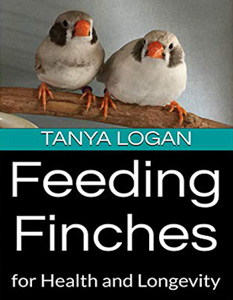
Feeding Finches
Give your finches the nutrition they deserve. Learn the easy CHOPP™ method and simple recipes that help your birds live longer, thrive, and sing with energy.
Available in paperback & Kindle e-book
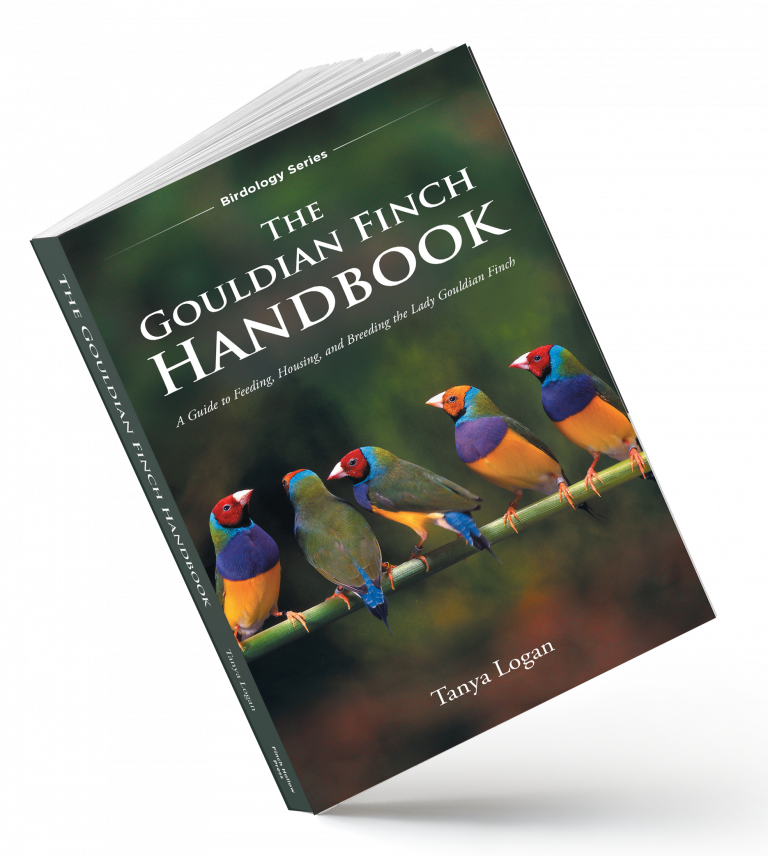
The Gouldian Finch Handbook
Discover how to keep your Gouldians happy, healthy, and brilliantly colored—with simple tips on housing, diet, breeding, and care that every bird lover can follow.
Available in paperback & Kindle e-book
Questions? You can submit them through the Contact page. We’ll get back to you as soon as possible.